About Professor
Shuchismita Sharma
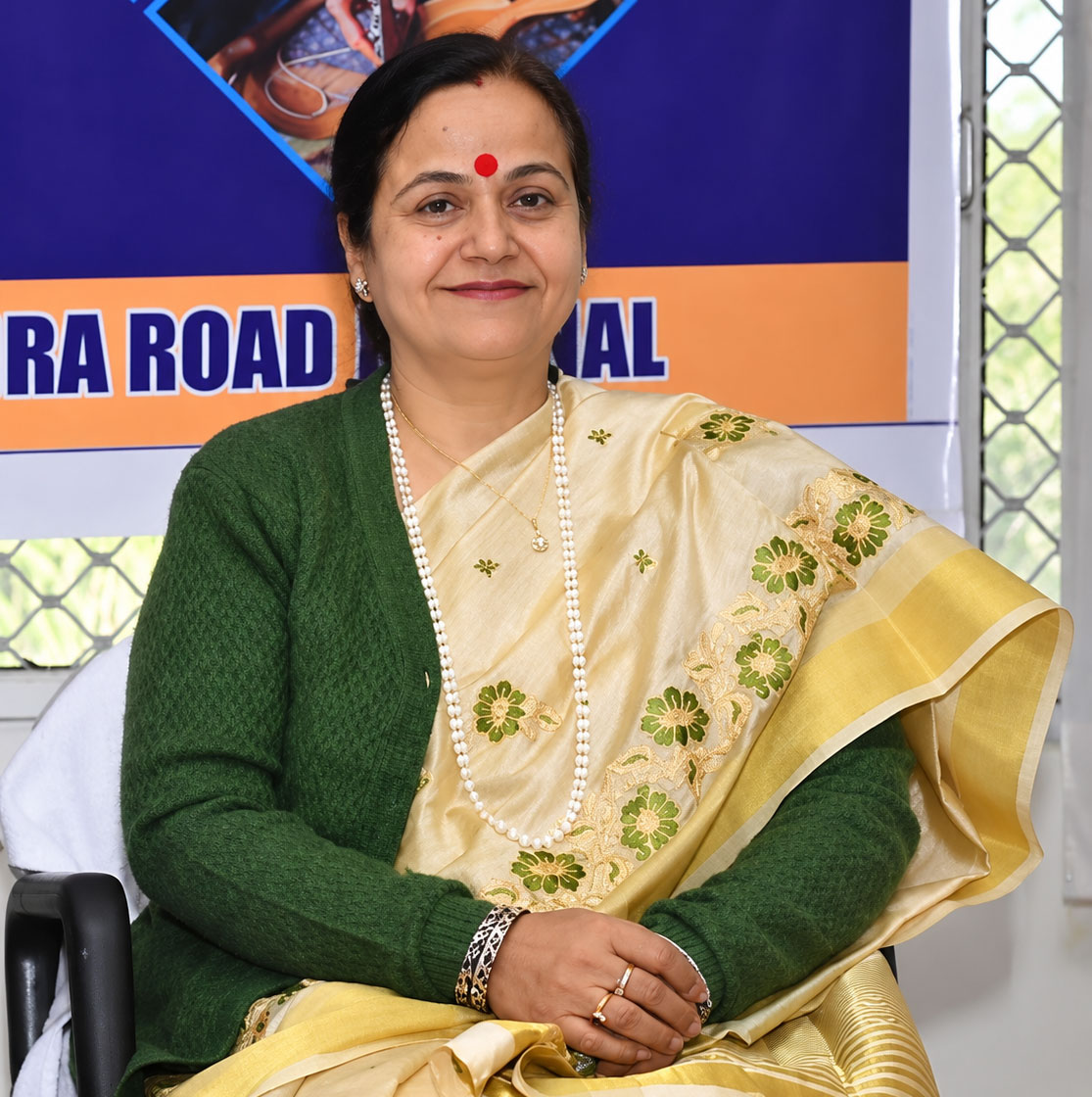
Professor Shuchismita Sharma is an academician, educationist and Indian classical vocalist whose career spans more than four decades of teaching, research, cultural leadership and university service. Through her work at Kurukshetra University, she has combined musical scholarship with academic administration, doctoral mentorship and initiatives that connect education with India’s cultural and intellectual traditions.
Her association with Kurukshetra University began as a student. She completed her bachelor’s degree in 1983, earned a gold medal in her master’s degree in Music Vocal in 1985, and subsequently completed her MPhil in 1986 and doctorate in 1991. Alongside her university education, she trained under the late Professor Suresh Gopal Shrikhande of the Jaipur Atrauli Gharana. This grounding in scholarly inquiry and the guru–shishya tradition has informed her approach to teaching, research and performance.
Research and mentorship form a substantial part of her contribution. She has supervised 36 doctoral scholars to successful completion and authored two books examining important aspects of Indian musical life. Haryana Mein Shastriya Evam Lok Sangeet Paristhiti Tatha Sambhavnayein explores classical and folk music in Haryana, while Akashvani Evam Hindustani Shastriya Sangeet examines All India Radio’s contribution to Hindustani classical music. Her broader research interests encompass musical history, its social context and changing forms of musical practice.
Her cultural work extends beyond the classroom and research publication. She served as project head and playback voice for Global Geeta Chant and contributed as convener and singer to Kurukshetra University’s Kulgeet. Her recordings also include Saraswati Vandana, Kurukshetra Maha Aarti and works associated with the Bhagavad Gita and national commemorations. Through these projects, she has brought her musical practice into university ceremonies and public cultural life.
Her work with heritage institutions, alumni organisations and the Gulzari Lal Nanda Centre has connected education with community participation, artisan skills and cultural preservation. Her university service has also encompassed women’s participation, gender sensitisation, student welfare and voluntary service.
Professor Sharma advocates universities that advance Sanskrit and Bharatiya knowledge traditions through rigorous scholarship, engage confidently with science and technology, and contribute to the development of their surrounding regions. Her writing explores how education can cultivate intellectual independence, ethical judgement and responsibility towards society.
Short biography for event hosts
1983
Bachelor’s Degree
Kurukshetra University
1985 · Gold Medalist
Master’s Degree in Music Vocal
Kurukshetra University
1986 & 1991
MPhil (1986) & Doctorate (1991)
Trained in Jaipur Atrauli Gharana under late Prof. Suresh Gopal Shrikhande
2007
Appointed Professor
Department of Music and Dance, Kurukshetra University
2008–2021 (Three Terms)
Chairperson, Dept. of Music & Dance
2008–11, 2014–17, and 2018–21
2019–2022
Dean of Indic Studies
Member of Executive Council & University Court
2023–2025
Dean Students Welfare & Gulzari Lal Nanda Centre Leadership
Student welfare, heritage & community programmes
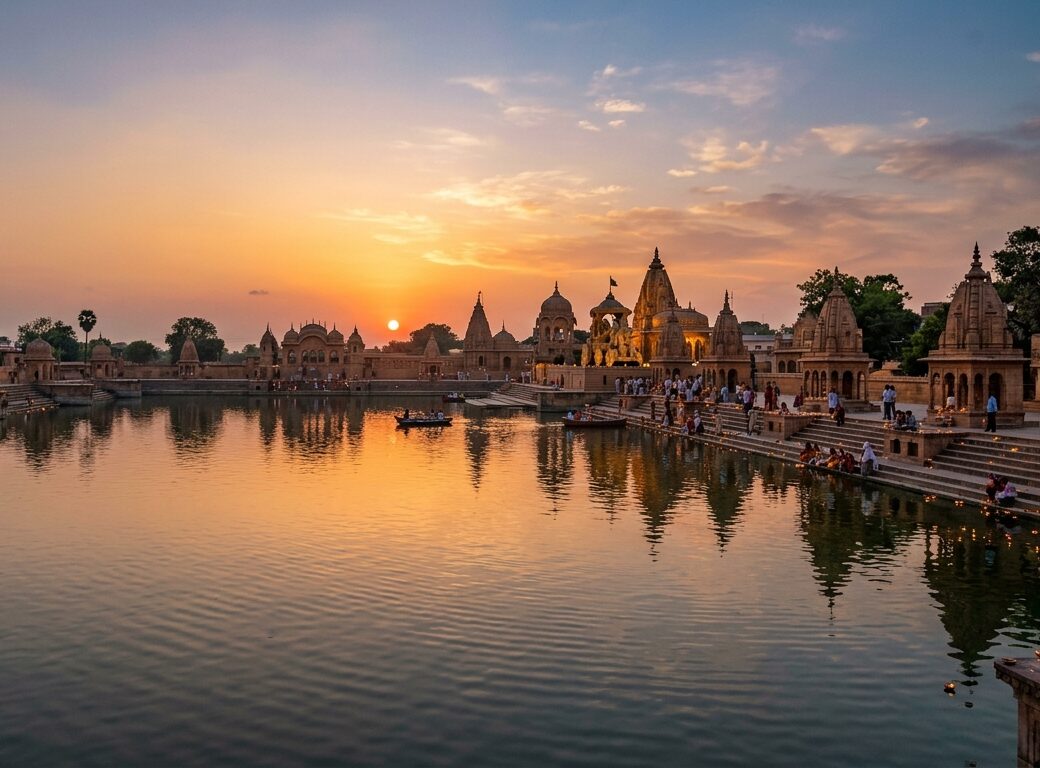
Kurukshetra as an Intellectual & Cultural Anchor
Her cultural contributions include Global Geeta Chant (Kurukshetra Development Board), the Kurukshetra University Kulgeet, Saraswati Vandana at Pehowa, and Kurukshetra Maha Aarti at Brahma Sarovar.
Through leadership at the Dharohar Haryana Cultural Museum and the Bharat Ratna Shri Gulzari Lal Nanda Centre, she has linked higher education directly with artisan skills under the PM Vishwakarma Scheme, folk arts, and community seva.
Three Connected Journal Series
Sanskrit & Indic Knowledge
Examines Sanskrit in contemporary scholarship, interdisciplinary inquiry, manuscript preservation, artificial intelligence, and a proposed Global Institute.
Kurukshetra as a University Region
The Future of Indian Education
Addresses Dharma, seva (service-learning), Indian languages in advanced knowledge, performing arts for the whole person, and a NEP implementation laboratory.